
The Benazir Income Support Programme (BISP) is one of the largest social protection initiatives in Pakistan. It was launched to provide financial assistance to low-income families, helping them meet basic needs like food, education, and healthcare.
Over the years, BISP has grown into a trusted lifeline for millions of households. The program uses a data-driven system to identify eligible families and deliver cash support directly to their hands — reducing poverty one family at a time.
In 2026, the government has announced important updates to the program, including higher payment amounts and a revised eligibility system. If you or someone you know relies on this support, read on to learn everything you need to know.
BISP New Payment Update 2026 – How Much Will Families Receive?
One of the biggest changes in 2026 is the increase in quarterly payment amounts. The government has revised the cash transfer amount to better match rising living costs.
Here is a quick overview of the updated payment structure:
- Quarterly Payment: Increased to help families keep up with inflation
- Annual Support: Eligible families receive consistent payments four times a year
- Kafaalat Program: Women registered under the Kafaalat initiative continue to receive direct payments through their BISP cards
The exact amount may vary slightly based on family size and poverty score, but the increase is designed to make a real difference in daily life.
Practical Tip: Always collect your payment on time. Uncollected payments may be reversed after a certain period. Visit your nearest BISP payment center or use a registered retailer to receive funds.
Who Is Eligible for BISP in 2026?
Eligibility for BISP is based on a National Socio-Economic Registry (NSER) survey. This survey collects household data and assigns a poverty score to each family.
You may be eligible if:
- Your household poverty score falls below the government-defined threshold
- You are a Pakistani citizen with a valid CNIC (Computerized National Identity Card)
- Your family is not already receiving support from another major government cash program
- You belong to a low-income household with limited assets
You may NOT be eligible if:
- A family member holds a government job
- Your household owns significant assets or land
- You are already enrolled in a similar federal program
In 2026, the government has also updated the NSER database to include more deserving families who were previously missed during surveys.
Key Features of the BISP Program 2026
The updated BISP program comes with several important features that make it more effective and accessible:
1. Direct Cash Transfer Money is sent directly to the registered woman of the household through a BISP Debit Card, reducing the chance of misuse.
2. Biometric Verification All payments now require biometric (fingerprint) verification at payment points, ensuring the right person receives the funds.
3. Expanded Coverage The 2026 update aims to bring more underprivileged families into the system, especially from rural and flood-affected areas.
4. Ehsaas & BISP Integration The Ehsaas Program and BISP work together under one national poverty alleviation framework, offering education stipends, health coverage, and emergency support alongside cash transfers.
5. Online Status Check Beneficiaries can now check their payment status online or via SMS — no need to visit an office every time.
How to Check Your BISP Payment Status in 2026
Checking your status has become much easier. Here are the available methods:
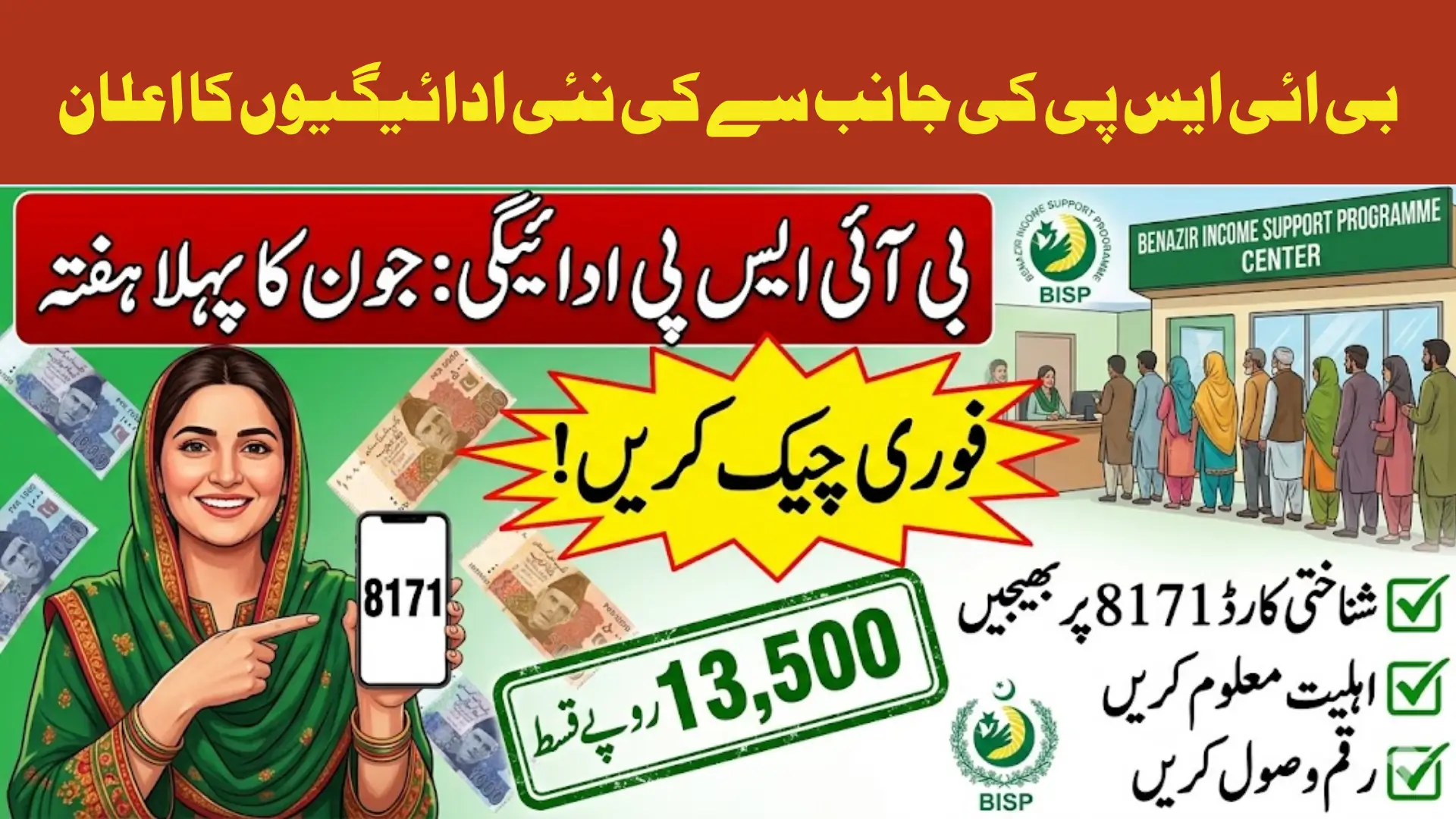
Method 1 – SMS Service Send your 13-digit CNIC number to 8171 from any mobile network. You will receive an instant reply with your payment and eligibility status.
Method 2 – Official BISP Website Visit the official BISP web portal and enter your CNIC to view your registration and payment details.
Method 3 – BISP Tehsil Office If you face any issues online, visit your nearest BISP Tehsil office with your original CNIC for in-person assistance.
Important: Never share your CNIC or personal information with unofficial agents or third-party websites. Always use official channels only.
How to Register or Re-Register for BISP in 2026
If you have never registered before, or if your information needs to be updated, here is what you should do:
- Visit your nearest NSER Survey Camp or BISP registration center
- Bring your original CNIC and family documents
- Complete the survey form honestly — the data you provide affects your poverty score
- Wait for confirmation — once your data is processed, you will receive an SMS if you are eligible
- Collect your BISP card from the designated office if approved
Re-registration is especially important for families who have recently moved, experienced a change in household income, or were affected by natural disasters.
Pros and Cons of the BISP Program
✅ Pros
- Provides direct financial relief to the most vulnerable families
- Women are empowered as the primary recipients
- Biometric security reduces fraud and leakage
- Covers a wide range of support — cash, education, and health
- Easy payment collection through retail agents and banks
❌ Cons
- Some deserving families may still be left out due to outdated survey data
- Rural areas sometimes face connectivity issues with biometric machines
- The process of appealing a rejected application can be slow
- Limited awareness in remote communities about how to register or re-register
Practical Tips for BISP Beneficiaries
Here are some simple but important tips to make the most of your BISP support:
- Keep your CNIC updated — an expired CNIC can block your payment
- Protect your BISP card — treat it like a bank card; do not share your PIN
- Check your status regularly via SMS 8171 to avoid missing payments
- Report any issues directly to the BISP helpline or Tehsil office
- Avoid middlemen — BISP payments are free, and no agent should charge you a fee to collect your money
- Update your information if your family situation changes — divorce, death of a spouse, or new dependents can affect your eligibility
Frequently Asked Questions (FAQs)
Q1: How much is the BISP payment in 2026? The quarterly payment amount has been increased in 2026 to match inflation. The exact figure depends on your poverty score and program category, but eligible families receive payments four times a year.
Q2: How do I know if I am registered in BISP? Send your 13-digit CNIC number to 8171 via SMS. You will receive a reply confirming whether you are registered and whether a payment is available.
Q3: Can men receive BISP payments? In most cases, BISP payments are made to the female head of the household. However, exceptions may apply in special circumstances, such as when there is no adult woman in the family.
Q4: What should I do if I am eligible but not receiving payments? Visit your nearest BISP Tehsil office with your original CNIC. Staff can investigate the issue, update your records, and help resolve payment problems.
Q5: Is the BISP program available outside Pakistan? No. BISP is a Pakistan government program for Pakistani citizens residing in Pakistan. Overseas Pakistanis are not eligible for this program.
Conclusion
The BISP Program 2026 update brings good news for millions of low-income families. With higher payments, better digital access, and expanded coverage, the program continues to be a critical support system for those who need it most.
Whether you are a current beneficiary or someone looking to apply for the first time, staying informed is the best way to make sure you receive the help you deserve.
If you found this guide helpful, share it with someone who might need this information. For the most current and official details, always refer to the official BISP government website or contact your nearest BISP office directly.